| |
| Tuesday, 10 November 2026 |
| Fire & Water: The Rivalry of Turner and Constable |
| Matthew Morgan |
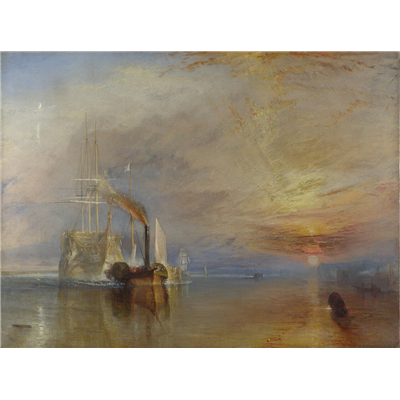 |
Two artists developed radically opposing approaches to the emotive power of landscape painting in Britain in the early 19th Century. One was dramatic, bombastic and fiery, intending to provoke powerful emotions and elevated thoughts. The other was spiritual, heartfelt and closely observed, asking the viewer to react to an intense, inward and personal approach to nature. These two artists were JMW Turner and John Constable, the leading British artists of their day. Not only did they approach painting in different ways but their lives were opposites as well. This lecture will explore their different approaches and their famous, bitter rivalry. I am an independent art historian, educator, and museum professional with a passion for sharing the joy of art. Over the years, I have spoken on subjects ranging from Caravaggio to Kehinde Wiley, though my first love remains the work of J.M.W. Turner and my primary focus is European painting of the 18th and 19th centuries. My career has been dedicated to helping people connect with art in meaningful and enjoyable ways, whether through lectures, exhibitions, or creative learning programs. I have lectured widely across Britain and Europe, in settings as diverse as universities, festivals and cathedrals as well as Galleries such as the National Gallery, the Royal Collection, the Wallace Collection, the Courtauld Institute and the Victoria and Albert Museum. My degree is from Cambridge, I studied at the Courtauld for my MA and my PhD is from Birkbeck, University of London. I have taught for more than eight years at Birkbeck, University of London, and served as Head of the London Learning Team at the Royal Collection. At the National Gallery, I devised and delivered a wide range of learning events, and earlier in my career I worked as a Director in the Valuations Department at Christie’s. Beyond museums, I have contributed to TV documentaries, podcasts, and radio programs, and created a series of short films about paintings available on YouTube. When I’m not immersed in art, you’ll find me enjoying my extensive jazz record collection—usually with a glass of red wine in hand. |
|
| Tuesday, 01 December 2026 |
| The Fabulous World of London's Lost Department Stores |
| Tessa Boase |
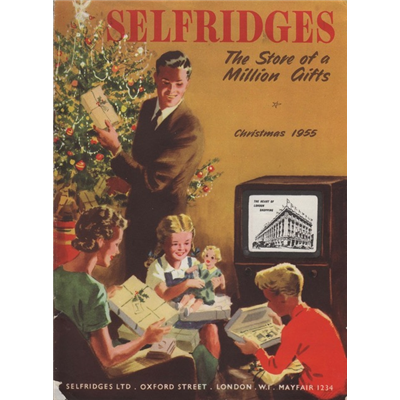 |
London’s sumptuous Victorian and Edwardian department stores changed the capital – and changed its women. Shoppers of every rank were lavishly wooed, seduced and often undone by the temptations laid out before them in these new ‘cathedrals of desire’. Tessa Boase is a freelance journalist, author, lecturer and campaigner with a particular interest in uncovering the stories of invisible women from the 19th and early 20th-centuries – revealing how they drove industry, propped up society and influenced politics. She’s the author of three books of social history: The Housekeeper’s Tale: The Women Who Really Ran the English Country House; Etta Lemon: The Woman Who Saved the Birds, and London’s Lost Department Stores: A Vanished World of Dazzle and Dreams. Since uncovering the feminist origins of the RSPB, Tessa has been campaigning for public recognition of its female founders with plaques, portraits and a statue. |
|
| Tuesday, 19 January 2027 |
| The Architecture of Mughal India: Palaces, Mosques, Gardens and Mausoleums |
| John Stevens |
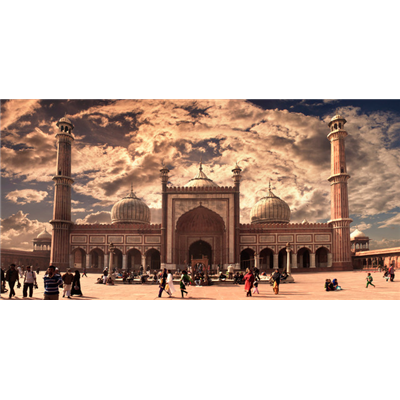 |
Before the British arrived in India, the Indian subcontinent was ruled by the Mughal Emperors. The stunning buildings and gardens they constructed from the 16th to the 18th century left an indelible stamp on India’s architectural and cultural landscape. From the Jama Masjid in Delhi, to the Taj Mahal in Agra, to the Shalimar Gardens in Lahore, this lecture will take you on a tour of some of India’s greatest buildings, and provide insight into the historical contexts and colourful personalities involved in their construction. Dr John Stevens is head of the London Bangla Academy, an online school that teaches the Bengali language to students across the world. He gained his PhD in History from UCL, before going on to teach British Imperial History, Indian History and Bengali Language at SOAS, University of London. His biography of the Indian guru Keshab Chandra Sen – Keshab: Bengal’s Forgotten Prophet - was published by Hurst and Oxford University Press. He is a regular visitor to India and Bangladesh and has lectured at numerous Indian universities. He also works as a consultant on Indian affairs. He has appeared many times in the Indian media, and was a guest on BBC Radio Four’s In Our Time, discussing the poet and artist Rabindranath Tagore. |
|
| Tuesday, 09 February 2027 |
| Eric Ravilious, Designer: Wood Engravings, Ceramics and Lithography |
| James Russell |
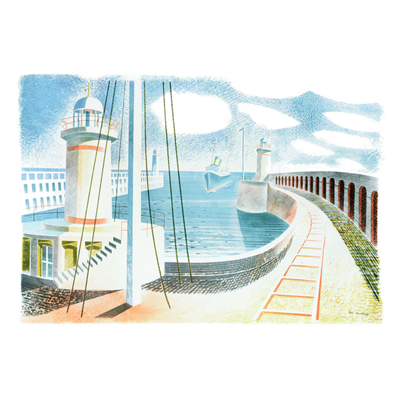 |
During his short life Eric Ravilious was acknowledged as a brilliant wood engraver, designer of ceramics and lithographer, and today his designs and illustrations are widely available once more, on china, cards and stationery. In this lecture we explore the making of his most familiar work, from wood engravings of winter scenes to the lithographs featured in High Street, his 1938 book of shops, and the Alphabet design created for Wedgwood. We also see how his work has influenced contemporary designers like Angie Lewin and Mark Hearld, and there are plenty of tips for collectors. Having studied History at Pembroke College, Cambridge, James Russell enjoyed a lengthy stint selling contemporary paintings and sculpture in Santa Fe, New Mexico, an experience that inspired him to begin writing and lecturing on 20th century art. Of his dozen or so books, one was a Sunday Times book of the year, while his writing has been described by critics as 'insightful', 'informative' and 'enjoyably readable'. James has curated major exhibitions at Dulwich Picture Gallery and for museums around the country. He bases his lectures on wide-ranging original research into the subjects that fascinate him. |
|
| Tuesday, 09 March 2027 |
| George Villiers, Duke of Buckingham - the handsomest man in the 17th century and his patronage of the arts |
| Lucy Hughes-Hallett |
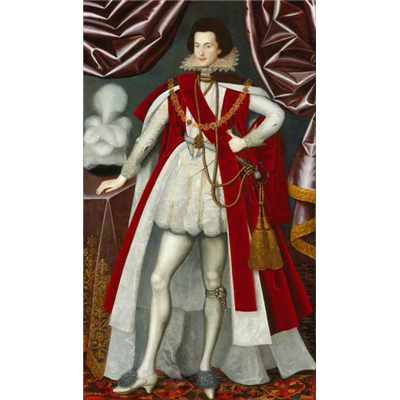 |
A king's favourite who amassed a great art collection. George Villiers, Duke of Buckingham, was the favourite of King James I - who addressed him as ‘my sweet child and wife’ - and subsequently chief minister to King Charles I. Buckingham was a beauty, and he surrounded himself with beautiful things. He enjoyed exquisite clothes, like the fabulous white silk suit encrusted with diamonds that he wore to visit the Queen of France. He was a superb dancer. When he cut capers during a court masque King James startled visiting ambassadors by shouting out ‘By God, George, I love you!’ Lucy Hughes-Hallett's most recent book on the 17th century Duke of Buckingham, The Scapegoat, has won the Plutarch Award for Biography of the Year and the Randy Shilts Award for Non-Fiction. Her previous biography, The Pike: Gabriele d’Annunzio was described in The Sunday Times as ‘the biography of the decade’. It won the Samuel Johnson Prize, the Duff Cooper Prize and the Costa Biography Award. Her other non-fiction books include Cleopatra and Heroes. She also writes fiction. Her novel, Peculiar Ground, is largely set in the 17th century, and narrated by a landscape designer loosely based on the diarist John Evelyn. It was described as 'almost Tolstoyan in its sly wit and descriptive brilliance' (The Guardian) and 'full of drama, vivid characters, wit, gorgeous writing and fascinating detail’. (New York Times). A Fellow of the Royal Society of Literature and of the Historical Association, she is a widely respected critic. She was Chair of the Judges for the 2021 International Booker Prize. |
|
| Tuesday, 20 April 2027 |
| A Decorative Art: History of Wallpapers |
| Joanna Banham |
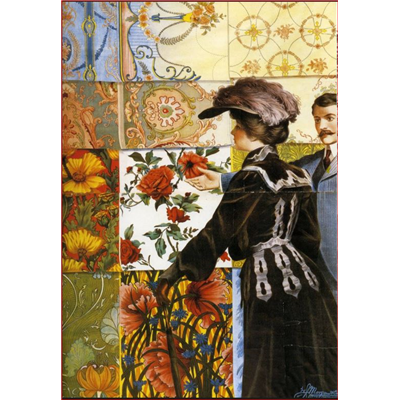 |
Wallpaper is often regarded as the Cinderella of the Decorative Arts – the most ephemeral and least precious of the decorations produced for the home. Yet, the history of wallpaper is a long and fascinating subject that dates back to the 16th century and encompasses a huge range of beautiful patterns created both by anonymous hands and by some of the best-known designers of the 19th and 20th centuries. This lecture explores the history and development of this product from earliest times up to the present day. Jo Banham is a freelance curator, lecturer and writer. From 2006-2016 she was Head of Adult Learning at the Victoria & Albert Museum, and before that Head of Learning and Access at the National Portrait Gallery, and Head of Public Programmes at Tate Britain. She has also been Curator of Leighton House and Assistant Keeper at the Whitworth Art Gallery. She has published on many aspects of Victorian and early 20th century decoration and interiors. She recently curated an exhibition on William Morris and the Arts and Crafts Movement for the Juan March Fundacion in Madrid and the Museu Nacional d’Art Catalunya in Barcelona and she is currently writing a book on the History of Wallpaper. She is also Director of the Victorian Society Summer School. |
|
| Tuesday, 11 May 2027 |
| Macaronis and Milordi: Clothing and Culture on the 18th century Grand Tour |
| Jacqui Ansell |
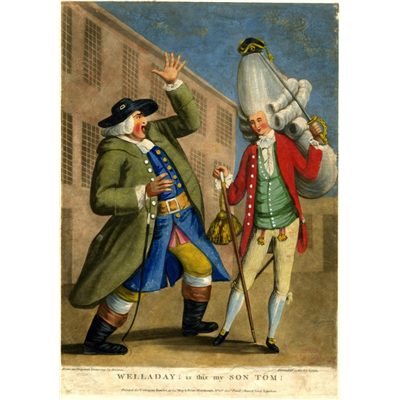 |
This lecture will be preceded by the AGM at 10.30am Travelling through mainland Europe on an extended ‘Grand Tour’ was the latest fashion amongst 18th century aristocrats. Many men (and some women) were lured by the thought of obtaining the latest fashions. Exquisite embroidery was cheaper in Paris, fine lace was bought in Flanders, and velvet in Italy. In Rome portraits were painted by Batoni for half the price of a Reynolds or Gainsborough. Gentlemen returning to London with new manners, dress and deportment were sometimes scorned as fops or ‘Macaronis’ (the ‘dandies of their day’). We will explore this phenomenon through contemporary paintings, letters, and satirical prints. Jacqui read History of Art and Theory at the University of Essex then gained an MA in History of Dress from the Courtauld Institute. Formerly an Education Officer at the National Gallery, London, and a tutor and writer for the Open University, she lectures regularly on the public programmes of the National Gallery, National Portrait Gallery and Wallace Collection. She's an expert on Court Dress, Grand Tour portraiture and Welsh Costume as well as dating and decoding dress in portraits, and has contributed specialist essays on these topics for the Wallace Collection, and Philip Mould. Jacqui has contributed to numerous National Gallery podcasts and appears on their Youtube channel lecturing on 'Love' (amongst other things). As Senior Lecturer at Christie's Education, London she prepared furture specialists in fine and decorative arts for the auction world, and wrote and presented numerous online courses on history of art, history of design and women artists (available for study now). Her 2023 lecture tour of New South Wales for the Australian Art Society was extremely well received. From June 2026 you can read her book on 'Fashion' in National Gallery paintings (Yale and National Gallery), and she is currently continuing her original research on Vincent Van Gogh's time spent in England - specifically Ramsgate - in 1876. |
|
| Tuesday, 08 June 2027 |
| ‘All the beasts of the earth and the flowers of the field’: depictions of flora and fauna in porcelain and pottery |
| Jane Gardiner |
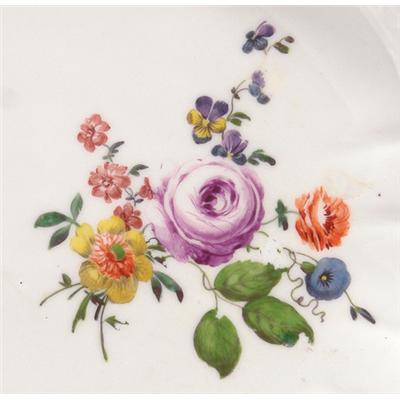 |
This lecture explores the various ways in which potters, over the centuries, have looked to the natural world for their inspiration – from the famous Tang horses of the seventh century to the botanical plates produced at Derby in the early nineteenth. It will include dishes swarming with realistic snakes and lizards, the great animal and bird figures made for Augustus the Strong of Saxony, tureens in the form of rabbits and chickens and the incredibly life-like bunches of porcelain flowers carried by the ladies at the court of Louis XV of France. MA History of Art, University of London. Trained at the V&A and continues to lecture there. Was Senior Lecturer at Sotheby’s Institute of Art for 17 years, becoming a Deputy Director of Sotheby's, UK. Has also lectured for the National Trust, the Art Fund, London University, Buckingham University, l'Institut d'Etudes Superieures des Arts in Paris, a private women's college in Saudi Arabia, on cruise ships and at antiques fairs and interior design conferences in America. |
|